
Lion Tracking in Uganda
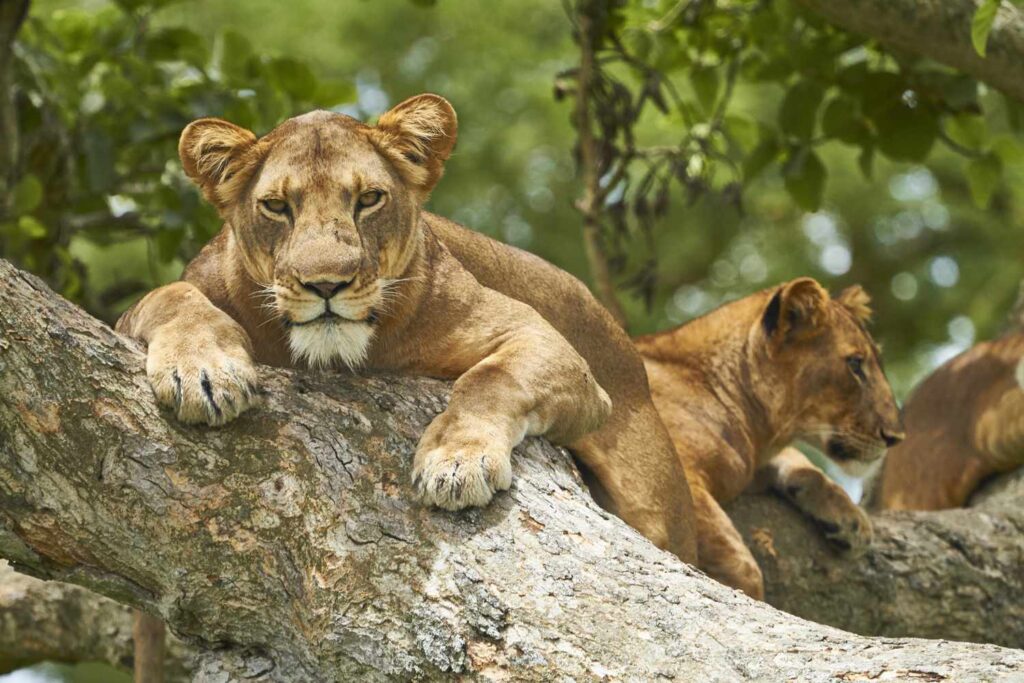
Lion tracking in Uganda is an exclusive, high sought after research experience conducted exclusively in Queen Elizabeth National Park. Lion tracking experience is led by researchers from the Uganda Carnivore Program and trackers join an active field team using radio-tracking devices to locate collared lions, observe their behavior, and contribute to vital conservation efforts. The activity is carried in the northern Kasenyi Plains sector of the park though researchers also study the famous tree-climbing lions of the southern Ishasha sector.
The lion tracking experience, unlike a standard game drive is an immersive, interactive research activity. You join a small group of researchers and use GPS and VHF radio tracking devices to home in on the signals emitted by collared lions. Once the collared pride is located, you can spend 1 to 3 hours observing them, helping gather data on their behavior, feeding habits, and social dynamics. You may even spot the park’s famous tree-climbing lions in the Kasenyi plains or Ishasha sectors in fig trees.
Booking and Costs of lion tracking
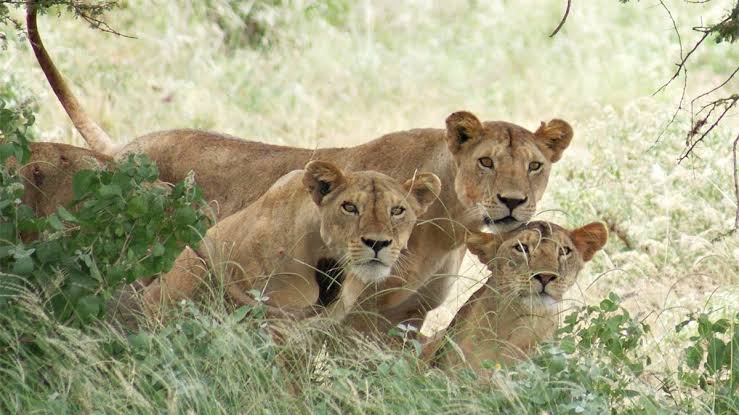
Permits for lion tracking are limited in order to minimize stress on the animals and ensure an exclusive, high-quality experience. It is highly recommended to book your permit at least 24 hours to several months in advance through the Uganda Wildlife Authority or a licensed tour operator. The current permit rates are, Foreign Non-Residents pay $200 per person, Foreign Residents pay $150 per person, East African Citizens pay 150,000 UG, Note that these fees are in addition to standard park entrance fees. It takes 2 to 3 hours per session. And there are three sessions available every day and these are Early morning session, afternoon session and night sessions.
Group size of lion tracking
Lion tracking in Uganda which is available only in Queen Elizabeth National Park is strictly limited to small groups people ranging from 4 to 6 visitors per session to minimize stress on the animals. This intimate experiential activity allows you to join researchers and rangers on foot or via safari vehicle. The reason as to why It’s different from a regular Safari is because there is guaranteed sighting, Rather than relying on luck, researchers use radio collars fitted to dominant lionesses, ensuring a very high probability of finding the pride.
Off-Road Access.
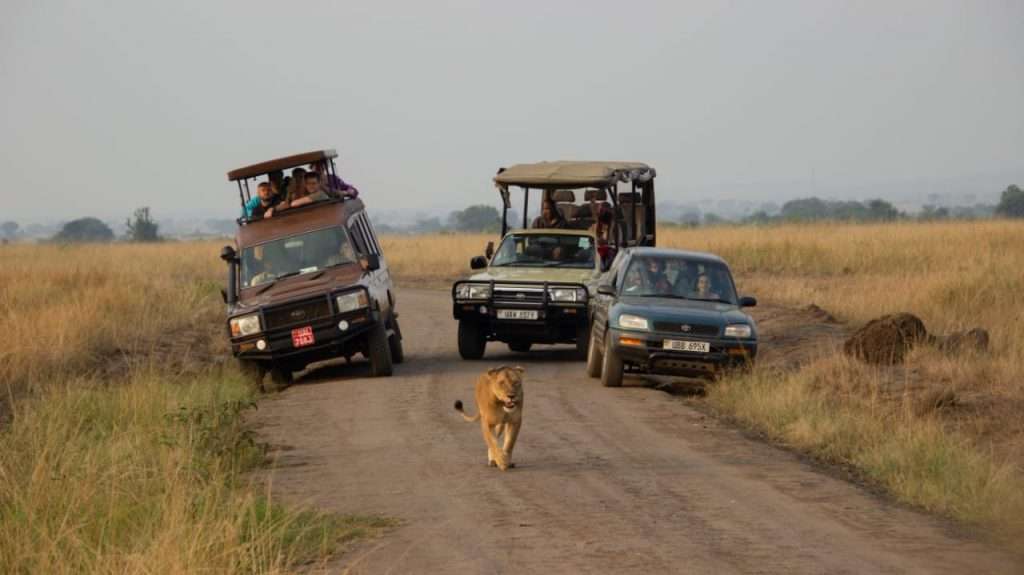
While standard game drives restrict vehicles to designated tracks, lion tracking allows authorized research vehicles to go off-road and deep into the savanna to locate collared big cats alongside conservationists. Off-road driving is not permitted for standard tourists, who risk heavy fines. It is exclusively granted during the specialized Lion Tracking Experience. Once the researchers locate the pride or individual, the vehicle drives off the main trail and directly into the tall grass to get you close enough for photography and behavioral observation. The tracking vehicle can drive off the beaten path to reach the precise location of the cats, providing an up-close and highly exclusive view.
Safety.
Because you are closely engaging with apex predators in the wild, you must strictly follow the guide’s safety rules and restrictions, To ensure visitor safety and protect wildlife, a strict set of regulations is enforced during all tracking sessions, You must remain inside the safari vehicle with windows and doors closed at all times. Do not attempt to exit the vehicle or lean too far out. Never eat, drink, or smoke in front of the lions. Human food or odors may agitate them. Complete silence is required while near the lions to avoid stressing the animals and to prevent interference with the telemetry/radio tracking equipment. You must listen to and immediately follow all directions from your specialized researcher or ranger guide. Flash photography and bright video lights are strictly prohibited as they irritate the lions and can provoke them to attack or flee. Off-tracking is only permitted under the direct supervision of Uganda Wild Authority and Uganda Carnivore Project researchers
Conclusion
Lion tracking in Uganda provides unique wild life adventure enthisiast who make impactiful contribution towards conservation programs in Queen Elizabeth National Park. Through this tracking activity tourist watch these natural predators hunt as well as contributing to conservation efforts for lions population. The lion tracking experiential prove to be stimulating and worthy activity uniting unexciting thrills with educational insight into wild life preservation during the forgettable safari experience.