
Types Rooftop Tents to Rent with 4x4 Landcruiser in Uganda
Types Rooftop Tents to Rent with 4×4 Landcruiser in Uganda,
Uganda, the Pearl of Africa, is one of East Africa’s most biodiverse destinations. With eight national parks, two UNESCO World Heritage Sites, and terrain ranging from equatorial forests to open savannah and alpine highlands, the country presents outdoor travellers with a breathtaking but logistically demanding landscape. Traditional ground tents expose campers to moisture, insects, and the ever-present threat of ground-level wildlife encounters. Rooftop tents (RTTs) solve all three problems elegantly.
Mounted directly onto the roof rack or crossbars of a 4×4 vehicle, a rooftop tent elevates the sleeper 1.5 to 2.5 metres off the ground, away from snakes, scorpions, hippos, and other nocturnal visitors that frequently wander through campsites along the Kazinga Channel, near Ishasha’s tree-climbing lions, and around the banks of the Albert Nile.
The rooftop tent rental market in Uganda has expanded rapidly since 2015. Kampala-based vehicle hire companies, safari operators, and overland specialists now offer a diverse fleet of tent types to suit solo travellers, couples, families, and large expedition groups. Understanding the distinctions between available types is essential before booking your self-drive or guided safari.
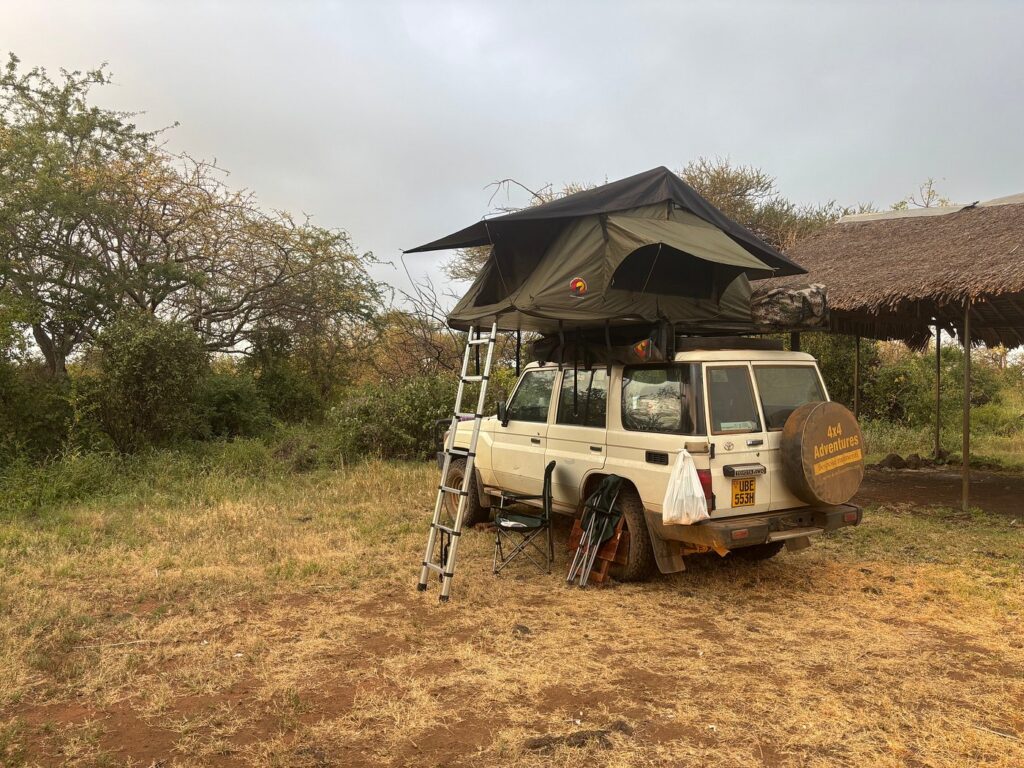
The Two Primary Categories
All rooftop tents fall into two broad categories: Hardshell (also called Hard-Top or Clamshell) and Softshell (also called Fold-Out or Traditional). Each category has subcategories optimised for different trip profiles, group sizes, and budgets. Understanding the distinction is the first step toward choosing the right rental.
Feature | Hardshell Rooftop Tent | Softshell Rooftop Tent |
Setup Time | Under 60 seconds (gas strut assisted) | 3 – 10 minutes (manual folding) |
Weight | Heavier (50 – 120 kg) | Lighter (25 – 60 kg) |
Wind/Rain Resistance | Excellent (rigid shell) | Good (ripstop canvas) |
Storage Space | Very compact when closed | Larger footprint when closed |
Rental Price (Uganda) | UGX 80,000 – 180,000/night | UGX 40,000 – 100,000/night |
Best For | Frequent movers, solo & couples | Families, budget travellers |
Fuel Consumption Impact | Slightly higher (aerodynamics) | Moderate |
Availability in Uganda | Medium – High | High (most rental fleets) |
Hardshell Rooftop Tents
Hardshell rooftop tents are the premium option in the Ugandan rental market. Constructed with a fibreglass, aluminium, or ABS plastic outer shell, these tents open via a gas-assisted hydraulic mechanism that pops the lid up in seconds, revealing a fully made sleeping platform with a high-density foam mattress, blackout liner, and ventilation windows. They close just as quickly, making them ideal for travellers who are moving camps daily — a common pattern on Uganda’s multi-park itineraries.
Clamshell (Wedge) Hardshell Tents
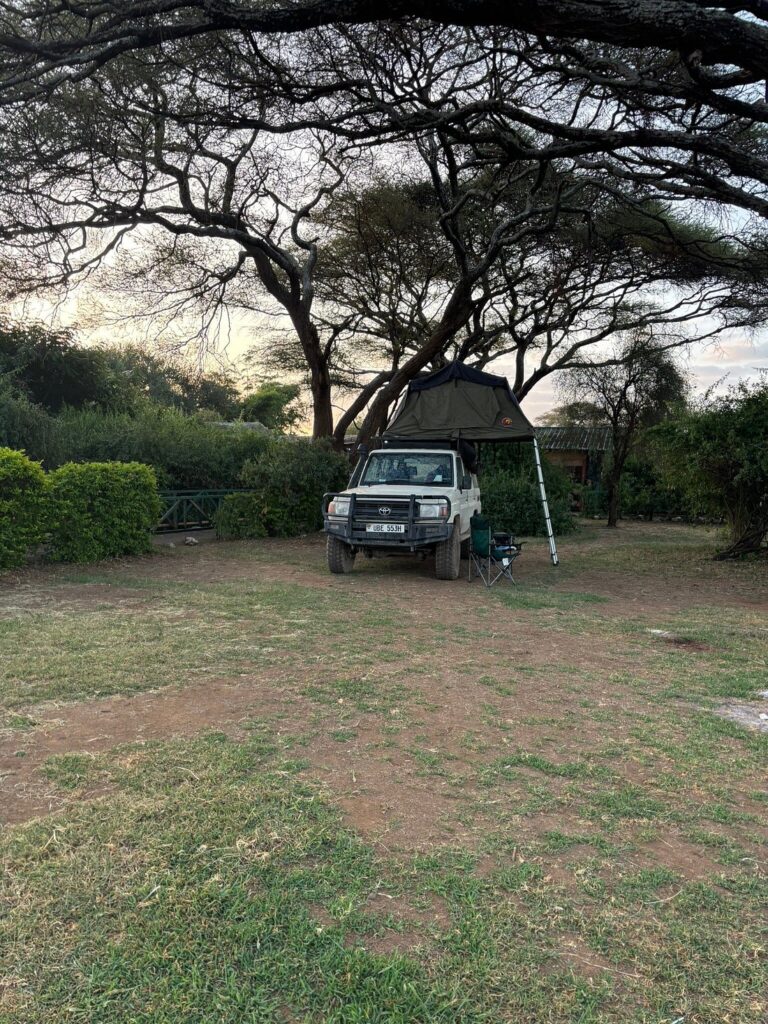
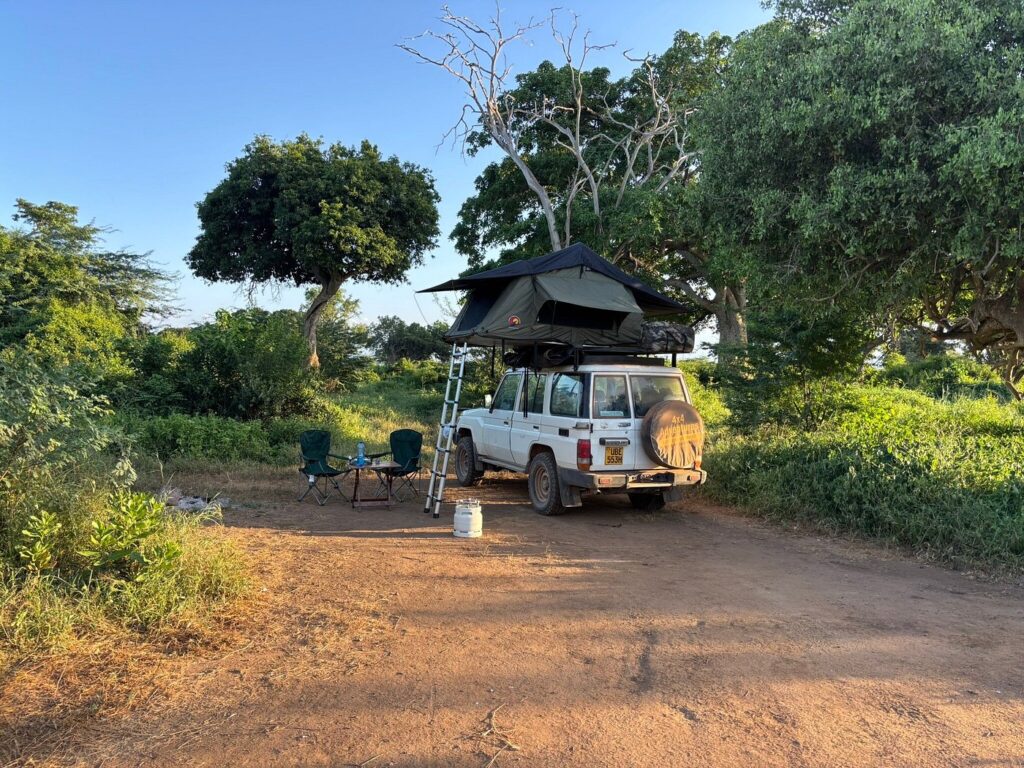
The clamshell is the most popular hardshell variant in Uganda. The tent opens like a clamshell mollusc: the rear half of the shell lifts upward at an angle, creating a slanted sleeping area. The interior is typically 120–140 cm wide and 200–210 cm long, accommodating two adults comfortably.
Key Features:
- One-hand opening in under 30 seconds with gas strut assistance
- Integrated foam mattress (typically 60–80 mm high-density)
- Telescoping aluminium ladder (included in all rental units)
- Mesh window screens — essential for Uganda’s tropical insect environment
- Waterproof ripstop annexe (optional — available from most Kampala rental agents)
- Low-profile aerodynamic design improves fuel economy versus softshell
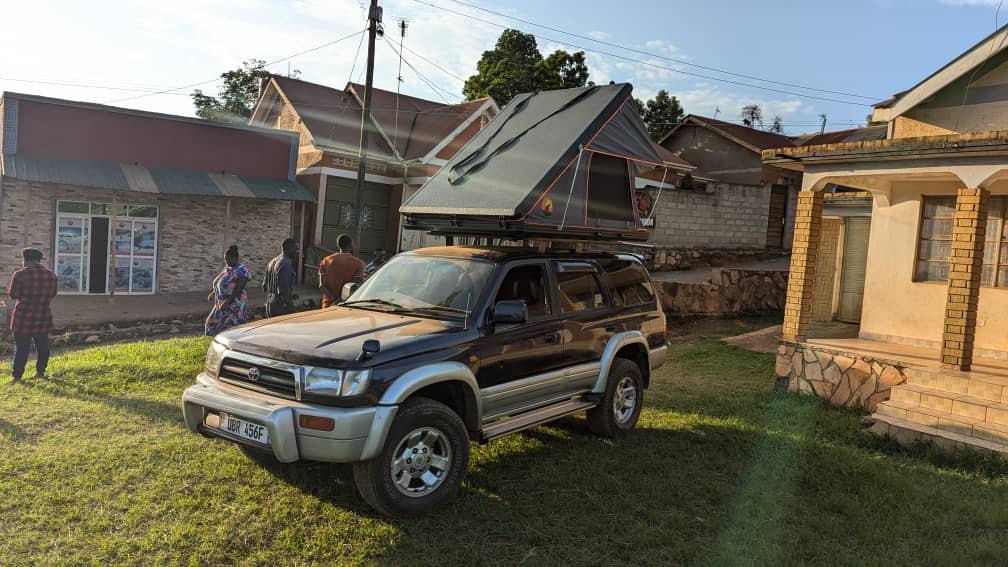
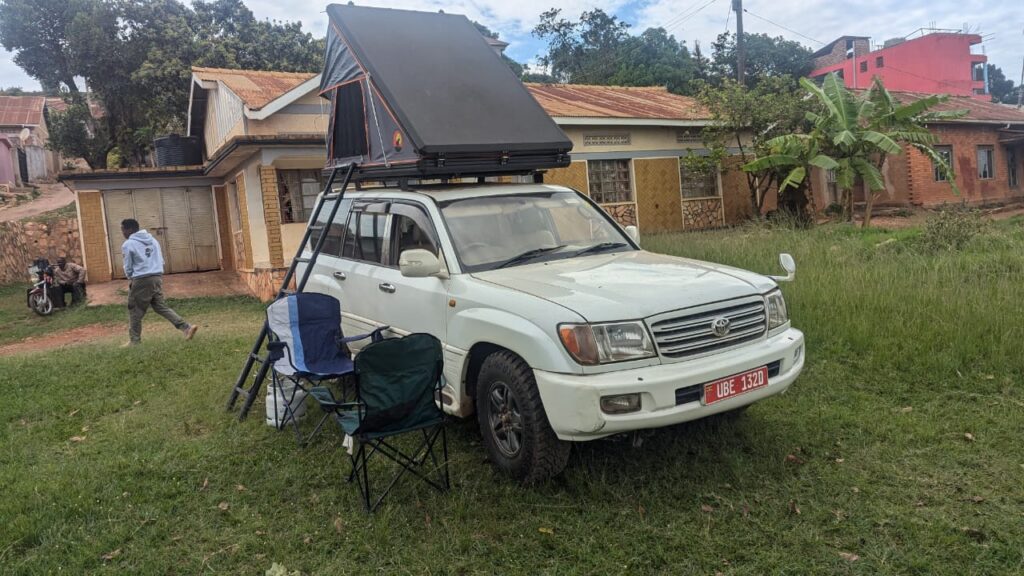
UGANDAN CONTEXT | Clamshell tents perform excellently on the murram (red laterite) roads between Kasese and Queen Elizabeth NP. Their sealed rigid shell keeps red dust out of bedding — a major advantage over softshell canvas, which requires thorough shaking after dusty game drives. |
Pop-Top (Box) Hardshell Tents
The pop-top hardshell has a flat lid that lifts straight up on four corner struts, similar to a campervan pop-top roof. This design creates greater headroom (up to 120 cm sitting height) and allows the tent walls to be softshell canvas panels that zip around the perimeter.
Key Features:
- Superior internal headroom — ideal for taller travellers
- Canvas side walls with multiple zippered windows and doors
- Wider sleeping area (up to 160 cm) — accommodates two adults plus a child
- Cross-ventilation from multiple windows — critical in Uganda’s humid equatorial zones
- Some models include an integrated stargazing mesh panel — popular for Kidepo Valley safaris
Pop-top tents are slightly slower to set up than clamshells (2–3 minutes) because the canvas walls must be zipped and tensioned, but they are beloved by photographers and wildlife watchers for their ability to open side panels 360 degrees while remaining at elevation.
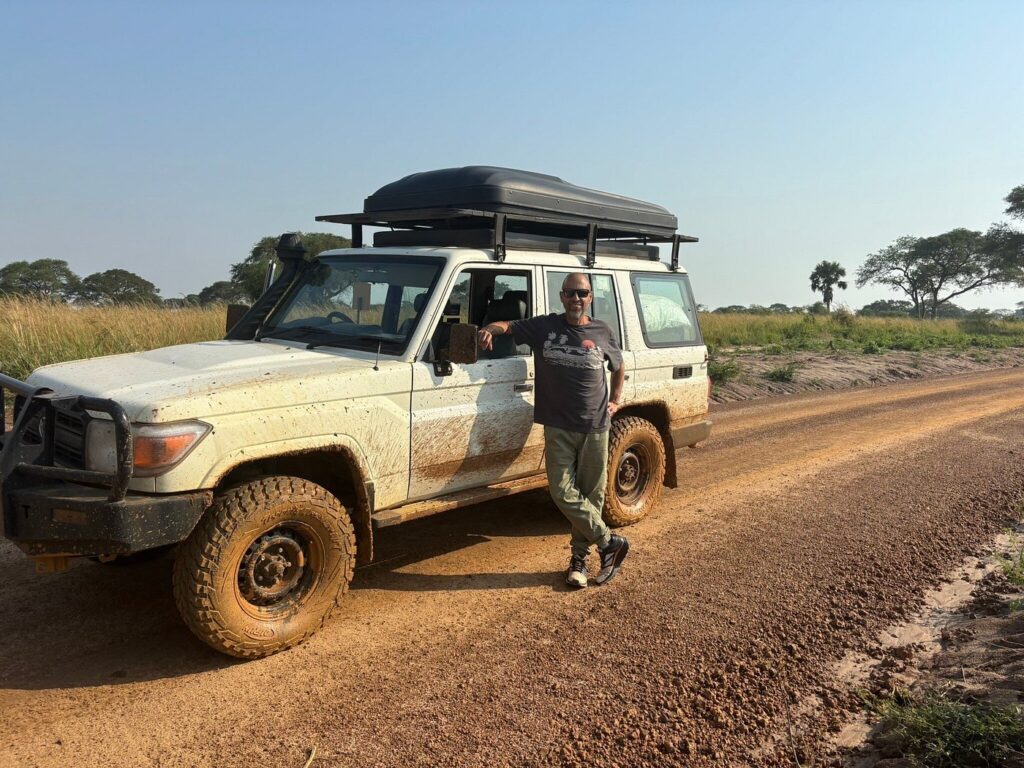
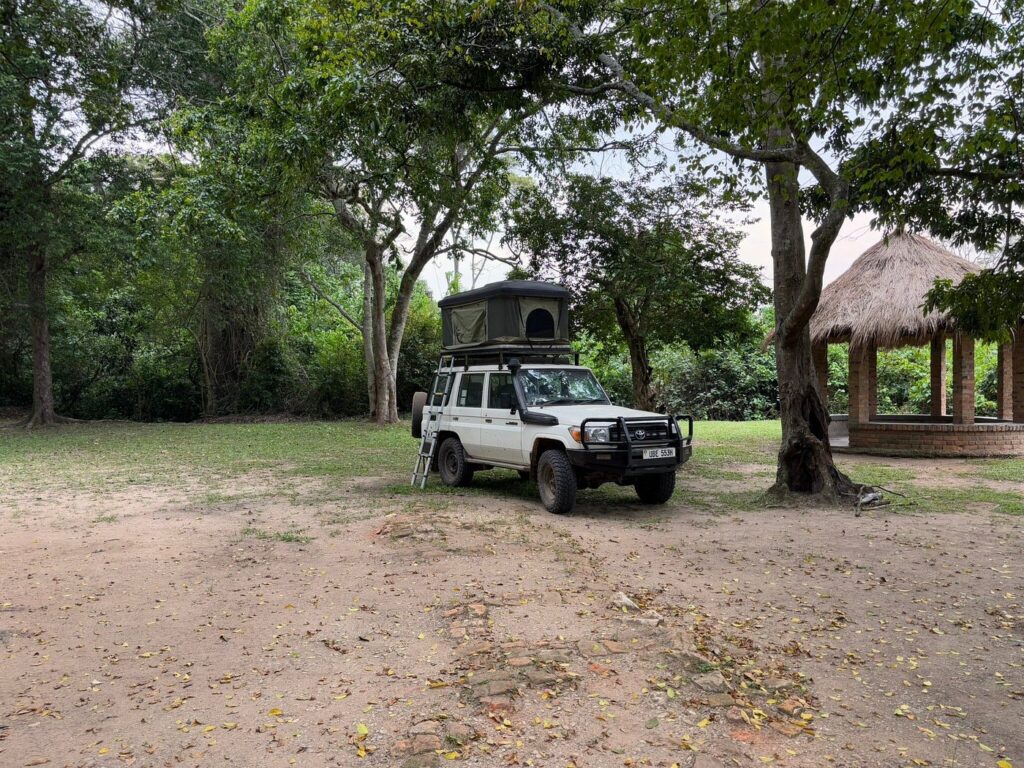
Hard-shell Annex Extensions
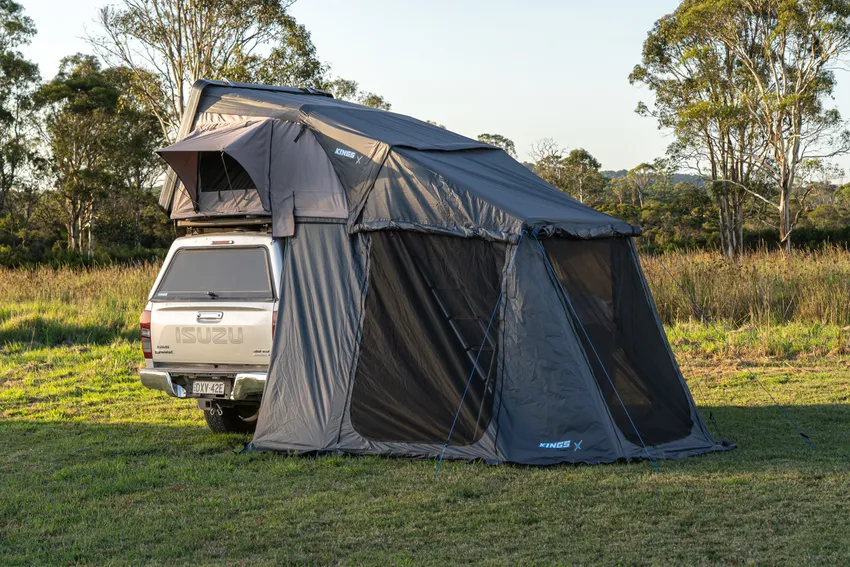
Most Ugandan rental companies offer an optional annex room that attaches beneath the hard-shell tent’s ladder entrance. This ground-level extension adds 3–4 square meters of enclosed space with a floor panel, offering a changing room, gear storage area, or additional sleeping space for a child on a sleeping mat.
- Typically made from 300D ripstop polyester with taped seams
- Connects via zip channel to the tent’s entrance skirt
- Adds approximately 10–15 minutes to setup time
- Rental surcharge: UGX 15,000 – 25,000 per night
Softshell Rooftop Tents
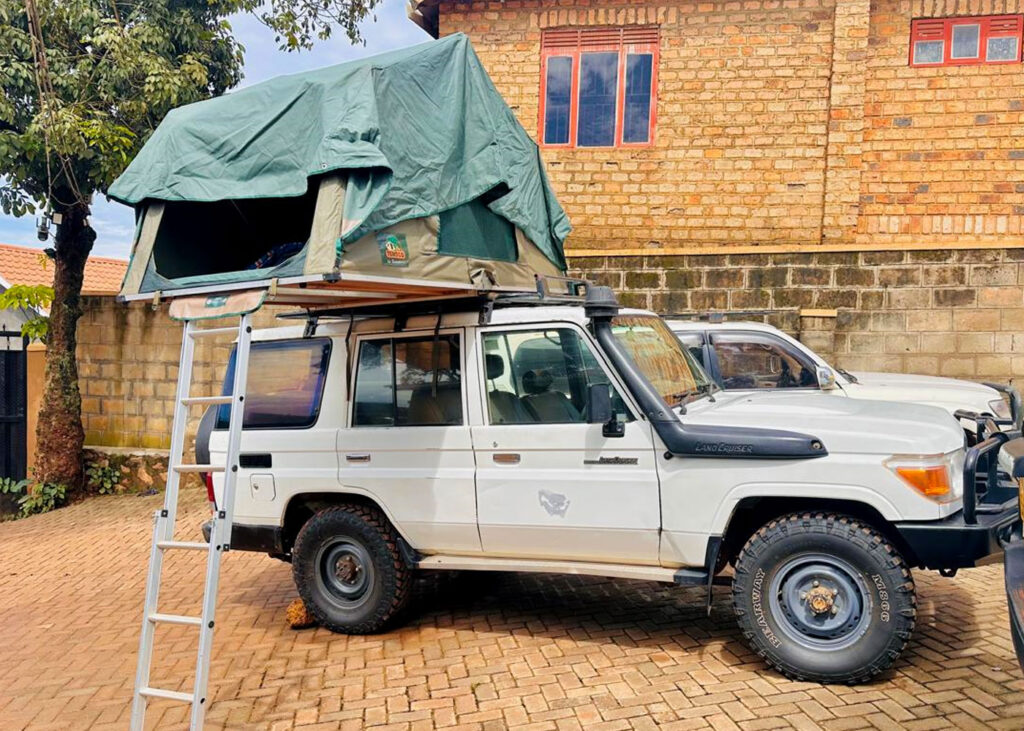
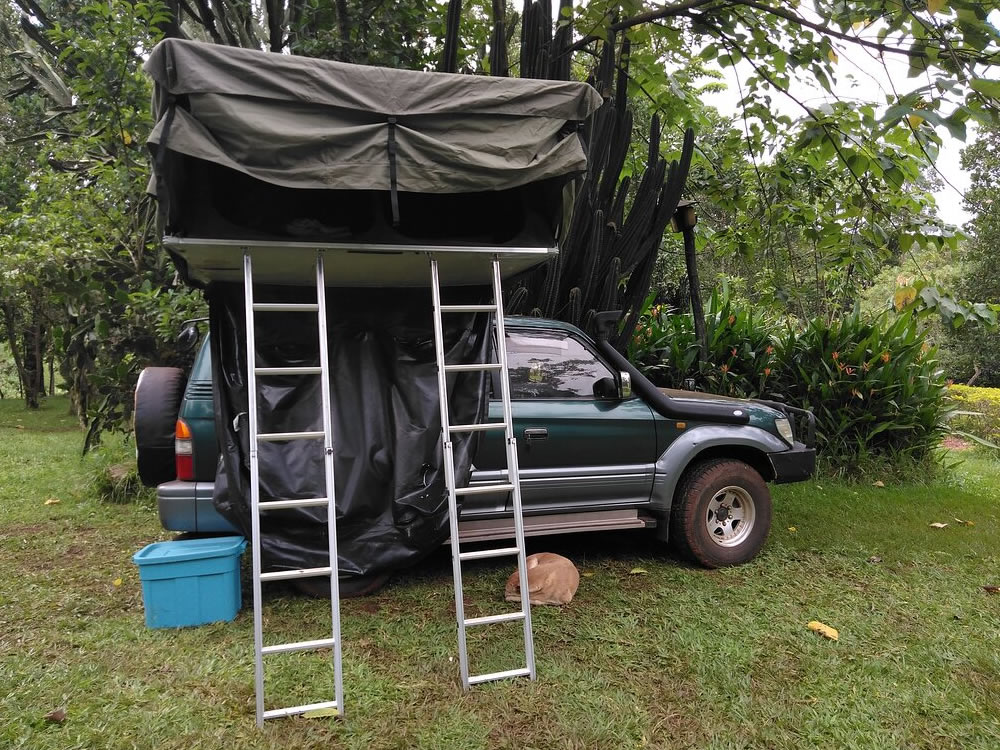
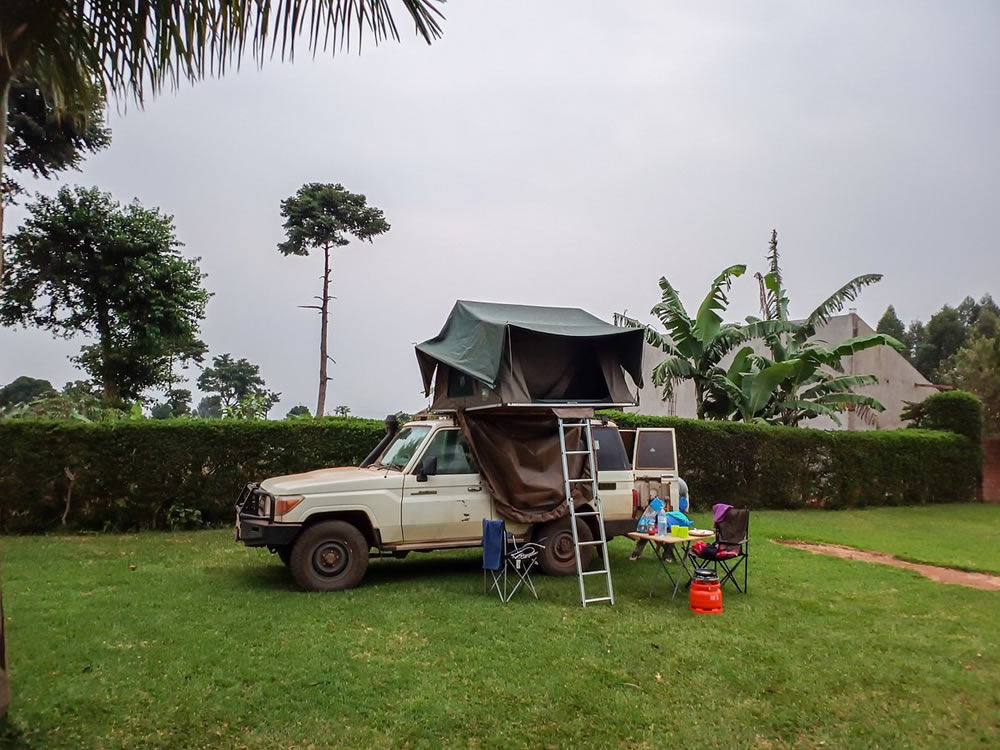
Softshell rooftop tents are the traditional and most widely available type in Uganda. They fold out laterally from a compact hinged base box, unfolding like a book to create a flat sleeping platform protected by a canvas or ripstop nylon tent body. Softshell tents dominate the budget and mid-range rental segment and are the standard offering on most Ugandan self-drive hire vehicles.
The key advantage of softshell tents is interior volume per kilogram — they create significantly more usable space than a closed hardshell of equivalent weight. The key disadvantage is setup time and vulnerability to dust infiltration through canvas seams.
4.1 Standard Fold-Out Softshell Tent
The standard fold-out is the workhorse of Uganda’s rental fleet. The tent body — typically 280D ripstop polyester or waxed canvas — is stored folded on top of the base platform. When deployed, it expands outward over a telescoping aluminium pole frame and is secured with guy ropes.
Key Features:
- Sleeping capacity: 1–3 persons (most Ugandan models are 2-person or 3-person rated)
- Waterproof rating: 2,000 mm hydrostatic head minimum (4,000 mm in premium models)
- Integrated bedding storage in the folded pack — mattress and pillows stay inside when packed
- Setup time: 5–10 minutes including guy rope tensioning
- Multiple windows with no-see-um mesh — essential near Uganda’s swampy areas and lakeshores
- Available in 1400 mm and 1600 mm width configurations
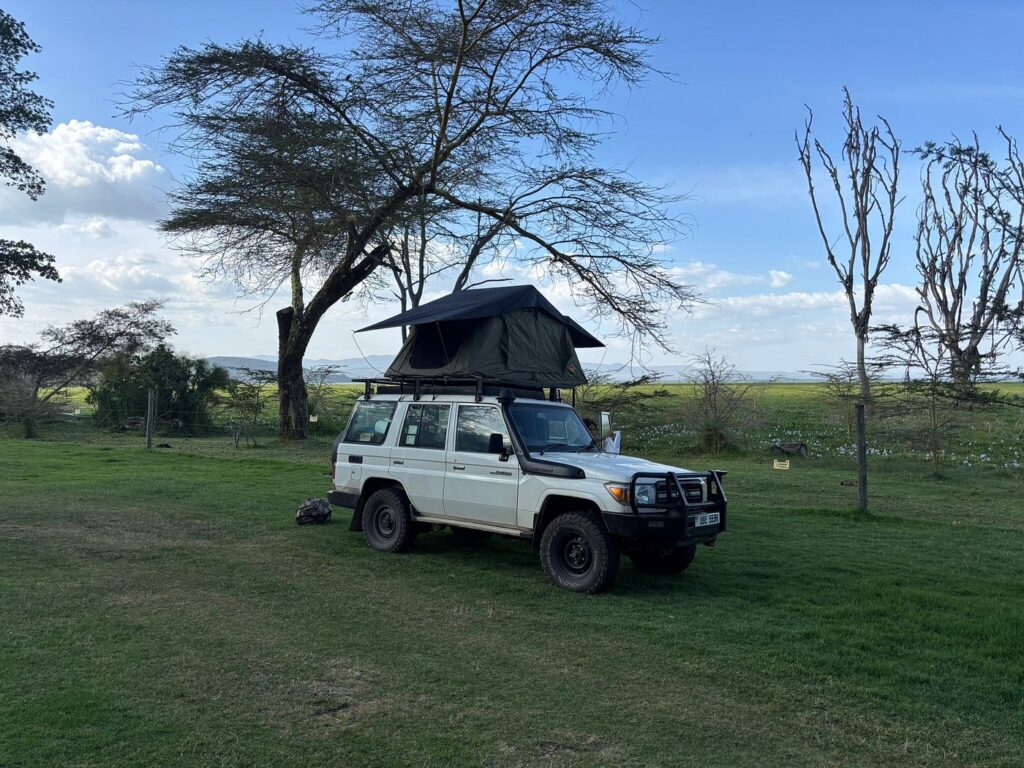
BEST FOR | Budget-conscious travellers, long-stay campers who move camp every 2–3 days rather than daily, and groups who prioritise interior space over rapid setup. Ideal for Bwindi gorilla trekking base camps where the tent remains in place for 2–3 nights. |
Extended Softshell (Family) Tent
The extended softshell is a larger version of the standard fold-out, designed to accommodate families or groups of three to four people. In Uganda, these are commonly rented with Toyota Land Cruiser 76 or 79 Series wagons with heavy-duty roof racks rated to carry the additional load (typically 120–160 kg).
Key Features:
- Sleeping area: 200 cm x 200 cm or 220 cm x 200 cm (queen to king-size equivalent)
- Annex room is standard (not optional) on most family tent models
- Dual-entry design: ladder entry and internal annexe entry
- Heavier canvas sidewalls (400 gsm) for improved insulation — important on Rwenzori-adjacent campsites where nights drop below 15°C
- Higher centre pole creates a cathedral ceiling for standing room of 120–130 cm
- Setup time: 10–15 minutes for one person, 5–8 minutes for two
4.3 Roof-Top Tent with Integrated Awning
A growing number of Ugandan rental operators now offer softshell tents with an integrated side awning — a 2 x 2.5 metre retractable shade panel that extends from the vehicle’s roof rail. The awning creates a shaded outdoor kitchen and dining area alongside the vehicle, significantly improving campsite livability during Uganda’s hot midday hours.
Key Features:
- 270-degree wrap-around awning coverage on premium models
- Drop-down side walls on some awning configurations for rain or privacy
- Awning pole system folds into the tent base for transport
- Combined tent-and-awning unit weighs 45–80 kg depending on model
- Rental premium: UGX 20,000 – 35,000 per night over base tent rate
TIP | An integrated awning is strongly recommended for the Ishasha sector of QENP and Murchison Falls NP, where afternoon temperatures regularly exceed 32°C and shade at campsites is often limited. It converts your campsite into a functional outdoor living area. |
5. Expedition & Specialist Rooftop Tent Types
Beyond the mainstream hardshell and softshell categories, a small number of Ugandan rental specialists — particularly those catering to multi-country East Africa expeditions — offer more specialised rooftop tent configurations.
Overland Expedition Tent (High-Clearance)
Designed for serious overlanding on Uganda’s most challenging tracks — the Kidepo Valley access roads, the Semuliki Valley dirt tracks, and river crossings en route to remote Albertine Rift camps — the expedition tent sits on a reinforced roof rack base with integrated toolbox and water storage channels. It is paired exclusively with heavy-duty 4x4s such as the Land Cruiser 79 Double Cab or Toyota Hilux Revo.
- Sleeping capacity: 2 persons in upper level; optional ground tent under vehicle
- Shell: 3 mm aluminium checker-plate base with fibreglass insulated lid
- Built-in 12V interior lighting and USB charging port
- Roof rack payload: 200+ kg rated
- Available from: select Kampala 4×4 rental specialists only
- Rental cost: UGX 180,000 – 280,000 per night (all-inclusive vehicle-tent package)
180-Degree Rooftop Tent
A relatively new arrival to the Ugandan market (introduced 2022–2023), the 180-degree tent folds to one side rather than forward, keeping the sleeping platform’s length running parallel to the vehicle. This is particularly useful on narrow campsites at Uganda’s forested parks, where opening a tent forward might intrude into neighbouring pitches.
- Side-opening mechanism reduces required campsite width to 3.5 metres
- Ladder position on the side allows safe ascent/descent on uneven forest floor
- Canvas tent body offers 360-degree panoramic mesh windows
- Popular with birdwatchers: the sleeping position aligns with the vehicle’s side, giving an unrestricted view
Rooftop Tent Trailers
For larger groups or operators who want to keep vehicle roof weight low, rooftop tent trailers mount a softshell or hardshell tent atop a purpose-built off-road trailer that is towed behind the primary vehicle. The trailer also carries water, fuel, and equipment. This configuration is used on some of Uganda’s longer fly-camp safaris in Kidepo and Murchison.
- Tent trailer payload: 500+ kg total (tent + supplies)
- Off-road rated suspension: independent coil or leaf spring
- Trailer tent sleeps 2–3 adults independent of the tow vehicle
- Adds flexibility: trailer can be unhitched and left at camp while vehicle does day drives
Rooftop Tent Materials & Their Uganda Relevance
Material quality is especially important in Uganda, where temperature swings, equatorial rainfall, and high humidity create demanding conditions for camping shelters.
Canvas vs. Ripstop Polyester
Most Ugandan rental tents are made from one of two primary materials:
- Canvas (cotton poly blend, 280–400 gsm): breathes well, resists condensation, heavy, requires drying before packing. Preferred by long-stay campers and in cooler highland areas near the Rwenzoris.
- Ripstop polyester (150D–300D): lightweight, dries instantly, less breathable, more affordable. Preferred for rapid movement itineraries and the drier northern parks.
Premium Ugandan rental operators often stock polyester-cotton blended shells (60% poly, 40% cotton) that provide the best of both materials — the breathability of canvas with the quick-dry properties of polyester.
Rainfly Design & Uganda’s Rainfall Patterns
Uganda experiences two rainy seasons: the long rains (March–May) and the short rains (October–November). Even in the dry season, afternoon thunderstorms are common near Lake Victoria and in highland areas. A rooftop tent with a minimum 3,000 mm hydrostatic head rating, taped seams, and a separate rainfly is strongly recommended year-round.
- Taped seams: seams sealed with waterproof tape on the inside — non-negotiable in Uganda
- Separate rainfly: adds an insulating air gap and improved waterproofing
- Gutter channels: moulded into hardshell bases to divert rainwater away from the ladder
Choosing the Right Type for Your Uganda Safari
With so many options available, the table below provides a quick decision guide based on the most common Uganda safari profiles:
Safari Profile | Recommended Tent Type | Why? |
Solo traveller / couple, multi-park loop | Clamshell Hardshell | Fast setup, moves daily, aerodynamic, dust-sealed |
Family of 4 (QENP + Bwindi) | Extended Softshell (Family) | Large sleeping area, built-in annexe for children |
Budget self-drive trip | Standard Softshell Fold-Out | Most affordable rental, widely available |
Photographer / wildlife enthusiast | Pop-Top Hardshell | 360° canvas panels, superior ventilation & views |
Birdwatching (Mabamba, Entebbe) | Softshell + Integrated Awning | Shaded observation platform, lakeside comfort |
Long East Africa overland | Expedition Tent / Trailer Tent | Maximum payload, fuel storage, multi-country use |
Hot & dusty Kidepo Valley | Clamshell Hardshell | Dust-sealed rigid shell, fastest setup in remote sites |
Rooftop Tent Rental Costs in Uganda (2024–2025)
Prices below are indicative and based on market survey data from Kampala rental agents, Jinja-based overland companies, and safari operators in Fort Portal and Kasese. All prices are per night unless stated otherwise. Prices exclude vehicle hire.
Tent Type | Low Season ($) | High Season ($) | Weekly Discount |
Standard Softshell | 10 – 15 | 15 –20 | 10–15% |
Extended Softshell (Family) | 15–20 | 20 – 25 | 10–15% |
Softshell + Awning | 20– 25 | 25 – 30 | 10% |
Clamshell Hardshell | 30 – 35 | 30 – 35 | 8–12% |
Pop-Top Hardshell | 35 – 40 | 40 – 55 | 8–10% |
Expedition Tent | 45– 50 | 55–70 | Negotiable |
|
Note: High season corresponds to June–September and December–January. Always confirm whether rental rates include bedding, ladder, rainfly, and annexe, as these items are charged separately by some operators.
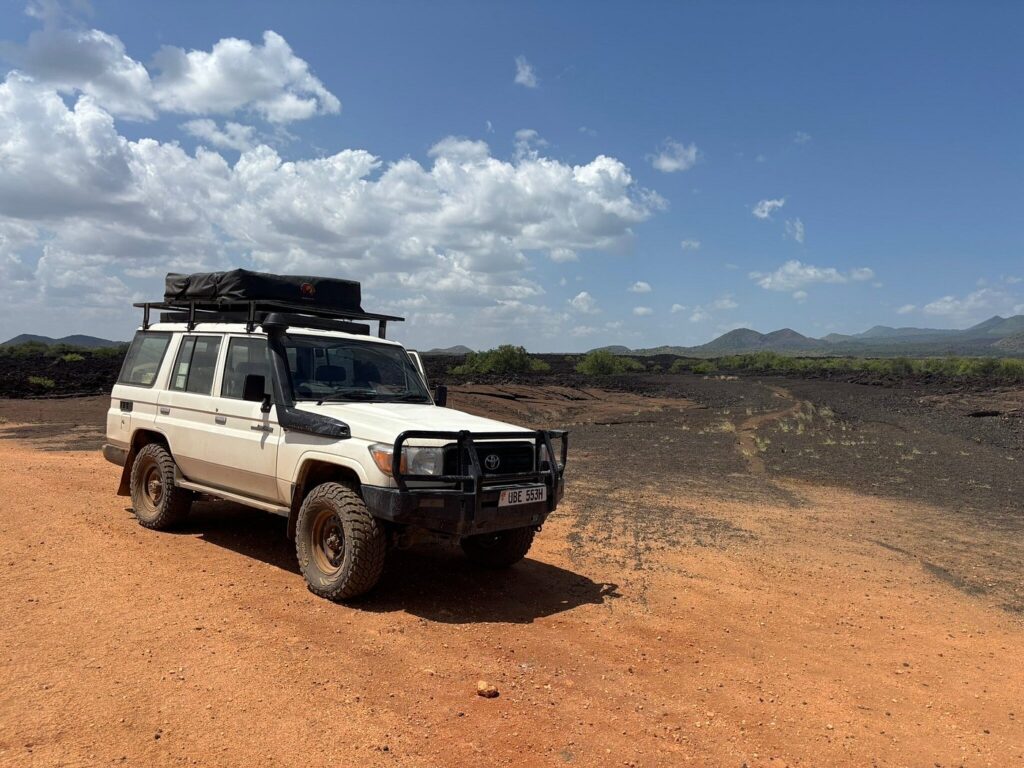
Top Rental Locations & Operators in Uganda
The following cities and regions are the primary hubs for rooftop tent and vehicle hire in Uganda:
Kampala
The capital is home to the largest concentration of 4×4 vehicle and rooftop tent rental companies. Operators are clustered along Jinja Road, Ntinda, and in the Nakasero and Industrial Area districts. Most Kampala operators offer airport pickup and can pre-fit the tent on the hired vehicle before collection.
- Best for: Full package hire (vehicle + tent + equipment)
- Recommended areas: Ntinda, Nakasero, Bukoto
- Availability: All tent types, including hardshell and expedition units
Jinja
Uganda’s adventure capital on the shores of Lake Victoria at the source of the Nile has a growing overland rental scene. Jinja-based operators often cater to travellers combining river rafting with national park safaris, and their fleets lean toward mid-range softshell and clamshell options.
- Best for: Eastern Uganda circuits (Mount Elgon, Sipi Falls, Lake Mburo)
- Availability: Standard softshell, clamshell hardshell
9.3 Fort Portal
The gateway to the Rwenzori Mountains, Kibale Forest, and the crater lakes region. Fort Portal rental agents specialise in tents suited to cooler temperatures and forest environments. Canvas softshell and pop-top hardshell units with strong insulation are most common.
- Best for: Western Uganda circuits (Kibale, QENP, Bwindi)
- Availability: Canvas softshell, pop-top hardshell, family tents
Kasese
Located near the Queen Elizabeth National Park entrance and the Rwenzori foothills, Kasese has a small number of rental specialists who also provide tent-equipped vehicles for the Ishasha sector (tree-climbing lions) and the Kyambura Gorge circuit.
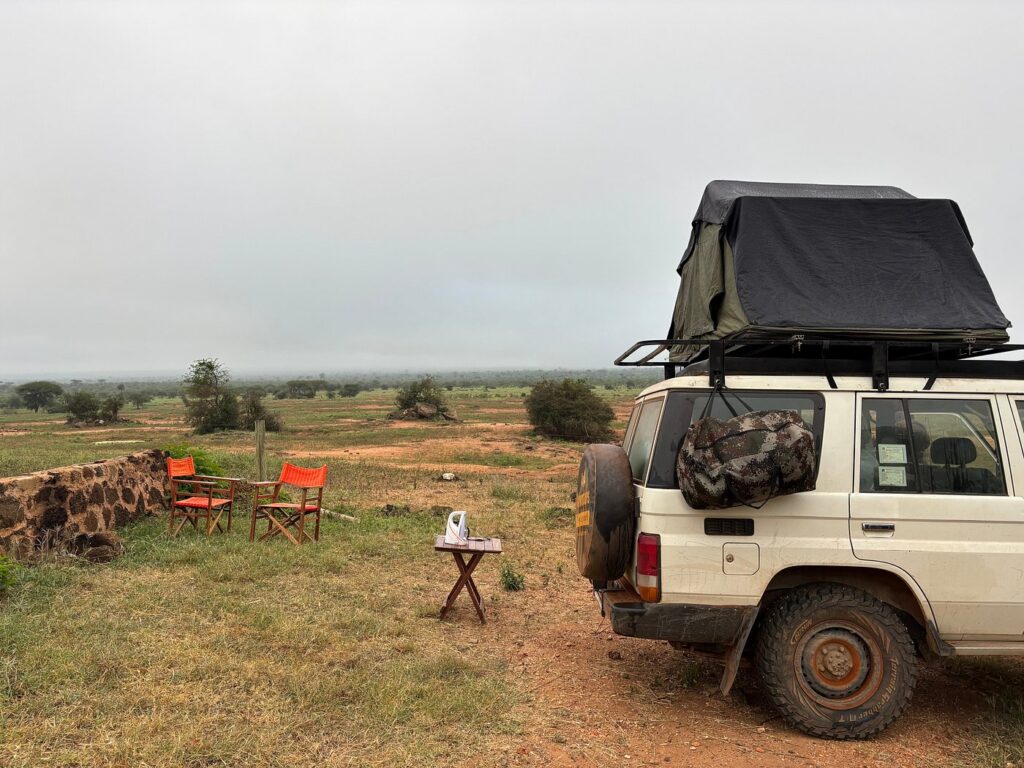
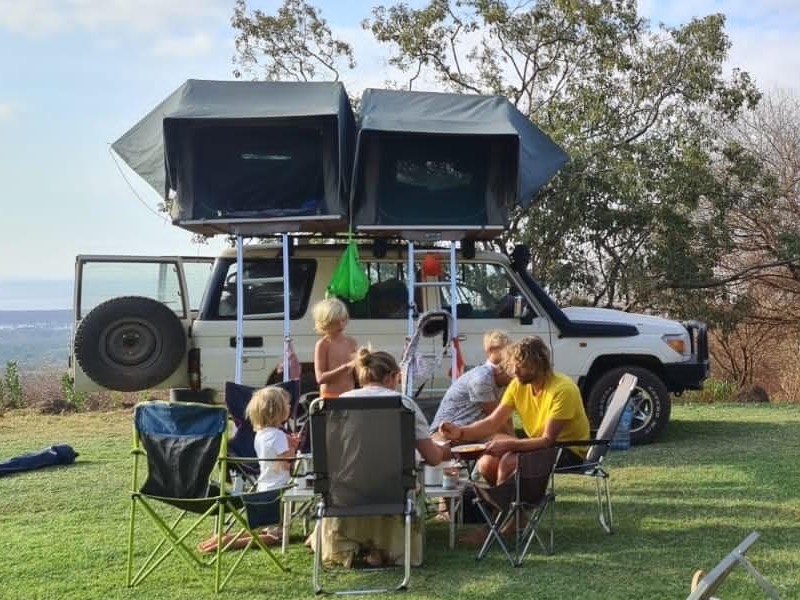
What to Check Before Renting
Before finalising any rooftop tent rental agreement in Uganda, verify the following items:
- Waterproof rating: Minimum 3,000 mm hydrostatic head. Ask for the brand and model of the tent to verify independently.
- Seam integrity: Inspect seams visually. All seams should be factory-taped or seam-sealed. Water ingress through seams is the single most common complaint in Uganda’s rainy season.
- Mattress condition: Press the foam. High-density foam (minimum 60 mm, 40 kg/m3) should spring back fully. Worn-out mattresses are common in high-use rental fleets.
- Mesh window integrity: Check for tears in window screens. Even small holes allow mosquitoes. Uganda has malaria-endemic regions including the Rift Valley floor.
- Ladder stability: Test the ladder fully extended. A loose or wobbly ladder is a safety hazard, especially at night in unfamiliar camp terrain.
- Roof rack rating: Confirm the vehicle’s roof rack is rated to carry the specific tent. Never exceed the rack’s rated payload. Overloaded racks can fail at speed or on corrugated roads.
- Insurance and damage clause: Understand the liability for tent damage. Some operators include basic cover; others charge a damage deposit of UGX 200,000 – 500,000.
Safety Tips for Rooftop Tent Camping in Uganda
Rooftop tents are inherently safer than ground tents in Uganda’s wildlife-rich parks, but additional precautions are important:
- Always camp within designated sites: Uganda Wildlife Authority (UWA) regulations require overnight visitors to camp in gazetted sites only.
- Keep food inside the vehicle, not in the tent: Primates (especially baboons and vervet monkeys) are notorious tent raiders at Queen Elizabeth and Kibale.
- Secure the ladder at night: Retract or remove the ladder when sleeping to prevent animals — and occasionally people — from climbing up uninvited.
- Check weight limits before loading extra gear on the tent platform: Rooftop tents are not designed to be storage units when occupied.
- Use mosquito coils or a plug-in diffuser on the tent floor if mesh damage is suspected.
- In elephant and buffalo areas (Murchison, QENP, Kidepo), park the vehicle facing outward for rapid departure if necessary.
- Carry a headlamp: Navigating a camp ladder at night in complete darkness is hazardous.
Conclusion
Uganda offers some of the most spectacular and diverse safari experiences in all of Africa, and a rooftop tent transforms that experience from comfortable to extraordinary. Whether you opt for the rapid-deploy convenience of a clamshell hardshell on a whirlwind five-park tour, the spacious canvas comfort of an extended family softshell in Bwindi, or the full expedition setup for a cross-border overland adventure, there is a rooftop tent rental in Uganda precisely suited to your journey.
The key is to match your tent type to your specific itinerary, group size, comfort requirements, and budget — and to inspect every rental unit carefully before departure. Uganda’s roads, weather, and wildlife will test both your vehicle and your shelter. Choose well, and the Pearl of Africa will reward you with memories that last a lifetime.