
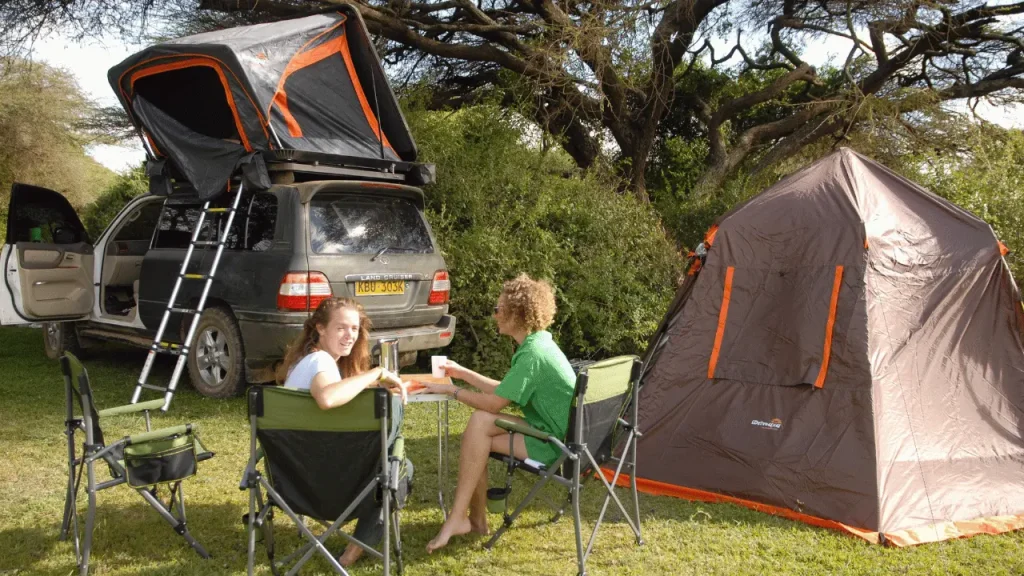
Rooftop Tent vs Ground Tent: Which Is Right for Your Overlanding Adventures?
Embarking on an overlanding adventure requires careful planning and the right gear. One of the fundamental decisions you’ll need to make is where you’ll rest each night. The choice between a rooftop tent and a traditional ground tent can significantly influence not just your comfort and convenience but also how you interact with your environment. This detailed guide explores the advantages and disadvantages of each option, helping you decide the best fit for your adventure style. Let’s compare them side by side across key factors so you can choose the one that best suits your travel style.
Setup and Takedown Time
Rooftop Tents are installed on the roof of your vehicle without the need for a mat or ground spikes. High-end hardshell rooftop tents often deploy quickly in one second by automatically lifting the tent with a gas pole once the clip is unlocked. Rooftop tents like the Wild Land even use patented hydraulic poles that can be fully erected in seconds. Stowing away is just as easy, just close the poles and lock the clips. In contrast, rooftop tents save a lot of assembly time, making it a time-saving and convenient experience for self-driving travelers who frequently change campsites.
Ground tents require finding a flat campsite, clearing the debris, and then spreading the tent base, inserting the poles, pulling the tent ropes and fixing the ground spikes. This series of steps is usually time-consuming. Even the quick-opening tents that claim to be able to be set up quickly take about 15 minutes to support a tent on their own. Therefore, the establishment and storage of ground tents are relatively cumbersome, especially after sunset or when the weather is bad.
Comfort (Sleep, Ventilation, Ground Moisture)
Rooftop tents are usually equipped with thicker foam mattresses for more comfortable sleep. Because the tent is suspended in the air, the bed does not need to bear the cold, hard or wet ground, and will not be soaked by the ground air when sleeping. The tent has large windows and mosquito nets on all four sides, which can provide good ventilation and a wider view. Wild Land’s tent is designed with three layers of waterproof fabric and thickened lining with good sealing, and can also reduce condensation at night through the upper ventilation holes. In general, rooftop tents are often slightly better in terms of sleeping comfort and dryness.
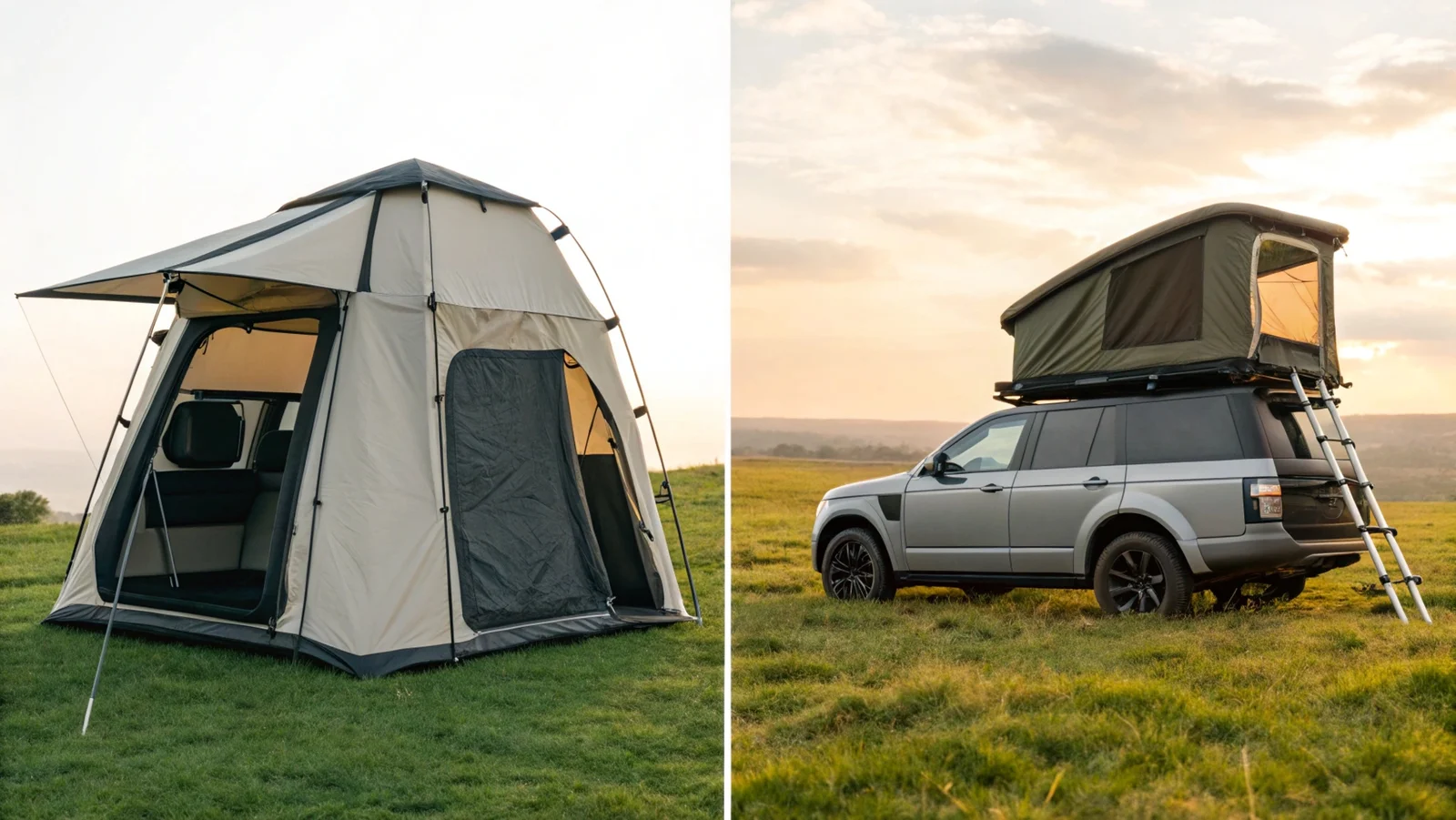
Generally, ground tents provide more spacious space and are suitable for multiple people or teams; some large tents can even accommodate an inflatable bed, tables and chairs, and a lot of luggage. However, the mattresses of ground tents are usually thinner, and you need to bring your own or buy a sleeping pad. In addition, after rain or at night, the bottom of the tent is easily affected by ground moisture. If the drainage is not good, the ground will be very wet, which is a clear advantage of rooftop tents.
Ground tents are generally larger and suitable for multiple people, but the mattress is thinner and the sleeping feel is harder. Especially in muddy environments, ground tents are often covered with mud and water, while roof tents are suspended in the air and are not affected by ground moisture. Ground tents need to be moisture-proof, such as using tent mats or plastic sheets to isolate the ground air. In addition, there are rainproof cloths and ventilation windows on the top of ground tents, but the overall air permeability is sometimes not as good as that of specially designed roof tents. In general, if you prefer sleep quality and a flat and dry bed, a roof tent will be more suitable; if you need a larger living space and have experience in setting up ground tents, ground tents can meet your needs.
Weather Adaptability and Safety
Rooftop Tents are usually made of heavy waterproof fabric and a sturdy hard shell, which is highly resistant to wind and rain. Many rooftop tents are equipped with high-density coated fabrics (such as PU3000mm) and have been subjected to harsh tests such as strong winds and heavy rain. High-end hard shell tents even use ABS shells and have been tested for 1,000 hours of simulated wind and rain to ensure waterproof, anti-corrosion and heat insulation. Rooftop tents are well sealed and have better thermal insulation, making them suitable for use in cold or rainy environments. In addition, the suspended design keeps you above the ground, which can avoid ground water and the intrusion of small animals, snakes and insects. In short, rooftop tents are usually stable in bad weather and can provide an extra sense of security.
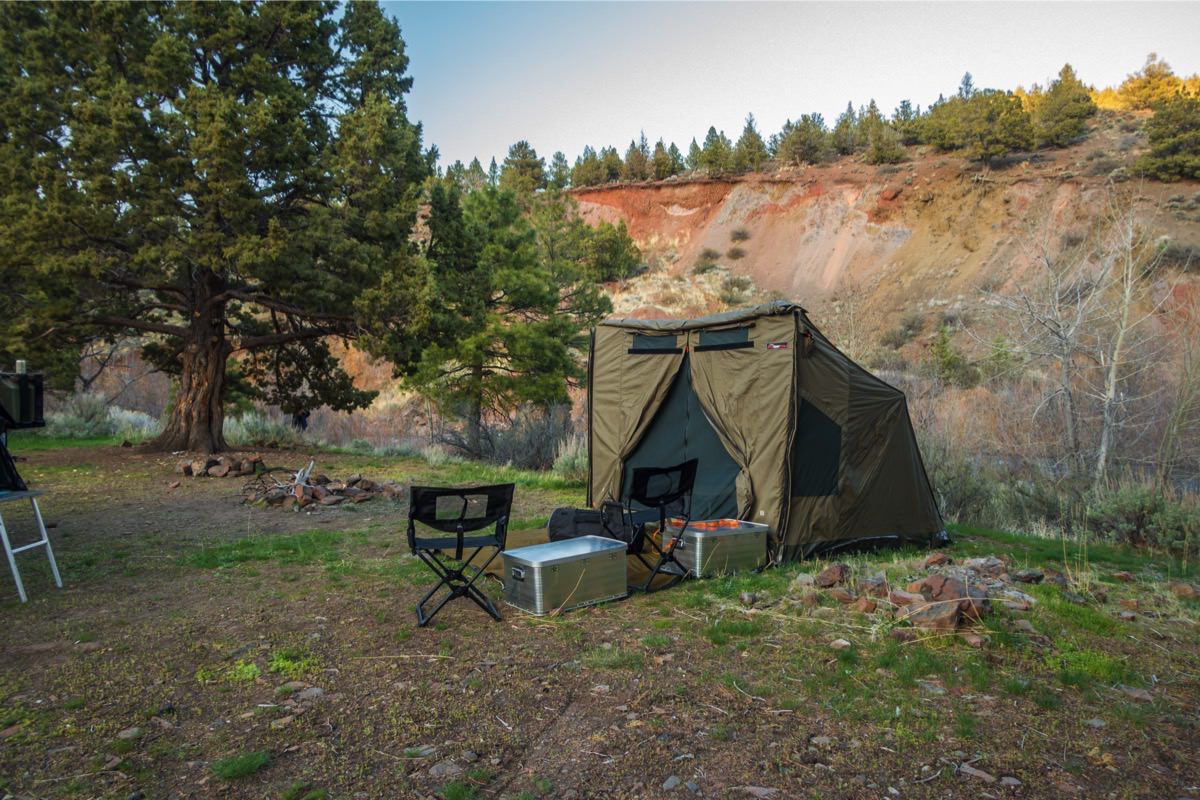
Ground Tents are not properly staked, strong winds may blow down the tent and heavy rain may also pour into the tent. Ground tents need to be reinforced with ground nails and ensure that the tent fabric is fully spread to withstand wind and rain. Once there is too much water flowing on the ground, if the camping site is low, water may accumulate and enter the tent. Because it is close to the ground, if the surrounding temperature difference is large, condensation may also form on the wall. Therefore, in continuous rainy weather, special attention should be paid to drainage and moisture prevention. In terms of safety, roof tents keep a distance from ground creatures and stagnant water, and some people think they are safer; but in fact, large predators usually do not attack tents, and ground tents can also prevent the invasion of most insects and snakes as long as the zipper is kept closed.
Price and Longevity
Rooftop Tents are expensive, The starting price of a rooftop tent is generally much higher than that of a ground tent of the same capacity. This is mainly because the structure of a rooftop tent is complex and the accessories (such as hard shell and support poles) are more expensive. However, in the long run, rooftop tents are generally more durable. A high-quality hard shell rooftop tent can have a service life of 10-15 years, and as long as it is properly maintained, the sturdy shell and waterproof fabric can withstand the test of long-term outdoor use. Brands such as Wild Land emphasize strict quality inspection and heavy materials to ensure that the tent can be used for a long time. In other words, although the initial investment is higher, a rooftop tent can become a long-term partner for many long-distance trips.
Ground Tents are generally more economical, and the entry-level models are very cheap, which is suitable for beginners with limited budgets or who are just starting out. But the low price often means that the fabric and poles are thinner and may have a shorter service life and need to be replaced more frequently. In contrast, the price of high-end ground tents of the same quality will also be close to that of some rooftop tents, but they are usually still behind in terms of bearing capacity and protection performance. Considering the intensity of use, it would be more cost-effective to choose a better quality tent if you camp frequently or use it in rugged environments.
Suitable People and Usage Scenarios
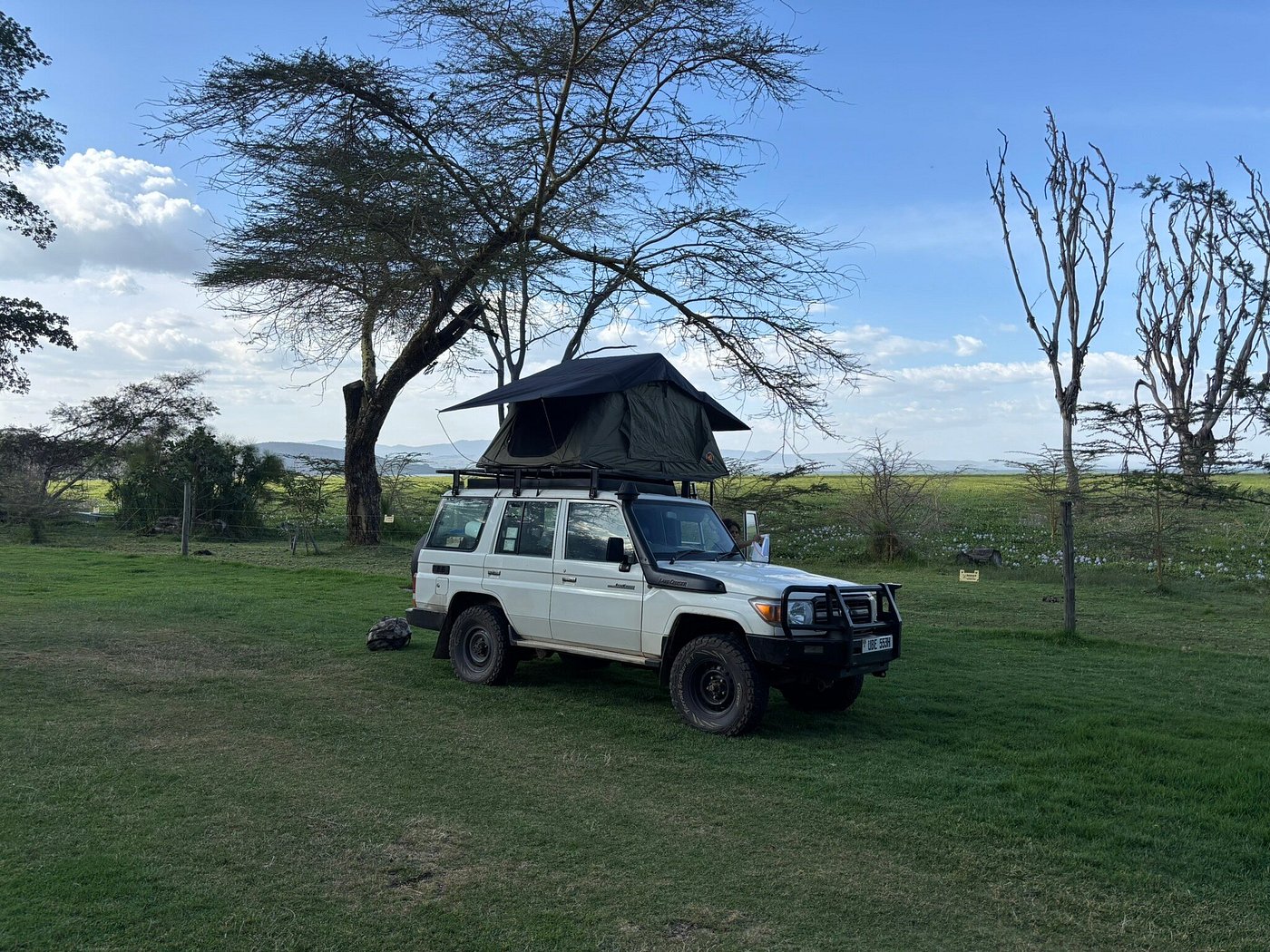
Rooftop Tents are particularly suitable for self-driving tours, off-road trips, and explorers who need to move camp frequently. For those who like to drive long distances, cross different terrains, or camp in remote areas, rooftop tents provide convenience and comfort. Couples or small families can use rooftop tents to save time setting up and enjoy a better sleep experience. In addition, outdoor enthusiasts who like to overlook the scenery will also enjoy the high-altitude perspective brought by rooftop tents. Brands such as Wild Land are targeting this type of users, emphasizing the ease of use and high quality of products to make off-road camping more worry-free.
Ground Tents are suitable for scenarios where you don’t rely on vehicles, plan to camp for a long time, or camp with multiple people. Ground tents are often used for hiking camping, family camping, or multi-person group activities because they have large space and can accommodate more people and equipment. If you plan to stay in a campsite for several days, ground tents can remain in place; when using rooftop tents, if the vehicle needs to leave the campsite, the tent must be folded first. Ground tents are also more mobile, which is convenient for friends to borrow or share between several vehicles. For users with limited budgets or occasional campers, ground tents are an affordable choice.
What Is the Best Overland Tent?
From soft shell to hard shell, and with many different brands to choose from, it can be difficult to decide which tent is best suited to your lifestyle. The most important question you need to ask yourself is, “Which is the best overland tent for ME?” Below we’ll discuss the most widely used overland tents, including the classic rooftop tent (soft and hard shell) and the ground tent. Hopefully, this information will help make the decision-making process much easier.
Soft and hard shell rooftop tents are classics among overlanders. Here are the pros and cons of each.
Advantages of roof top tents
Easy setup. No need to fiddle with tent poles, pegs, and straps! The mattress is already stored inside the tent and doesn’t need to be filled with air. You can also store your sleeping bag inside the tent.
The rooftop tent is off the ground, which removes your sleeping quarters from wet and muddy environments, bugs, and, potentially, animals. The platform also keeps you from rolling into holes, over rocks, or uneven sections of ground during the night. Sleeping up off the ground can also create a sense of security.
Ease of leveling. If you are camping in an area that isn’t flat, it’s easier to level your vehicle than trying to find a flat spot for a ground tent.
Rooftop tents have good airflow. Windows on all four sides optimize airflow patterns, resulting in much more comfortable sleep.
The mattresses are generally quite comfortable. It is also possible to add a foam topper for extra comfort.
A good quality Roof Top Tent is waterproof and water-resistant. Since the first season of Expedition Overland nearly ten years ago, the tent has been a great proving ground. We’ve slept soundly during incredibly rainy nights with no water leakage.
Rooftop tents are a blast to sleep in. They remind us of treehouses from our childhood and are a great place to enjoy the view.
Disadvantages of roof top tents
Once the tent is set up, you can’t drive your vehicle. This can be a drag if you’re heading into town every day. This setup is best if you are staying at a specific location for a while. Consider topping a trailer with a RTT. This setup makes it easy to leave the trailer at base camp while you head off to adventure during the day.
The classic rooftop tent does not handle wind well. The material is incredibly noisy with the potential for damage in high wind speeds. The hard-shell Roof Top Tent does better in windy environments, especially if you point the tent into the wind.
Compared to a ground tent, rooftop tents are heavy. Most weigh between 125 and 250 lbs., whereas a ground tent is 10 lbs or lighter. This high-mounted weight can result in reduced fuel mileage, alter the vehicle’s road manners, and increase sway.
A rooftop tent requires the installation of an appropriate mounting system. You must consider your vehicle’s payload when mounting any aftermarket accessories.
Rooftop tents are not immune to wear and tear. Time on rough roads will affect how the tent holds together. In addition, if your tent spends a lot of time open and in the sun, the sun’s rays will break the material down faster than your travels will.
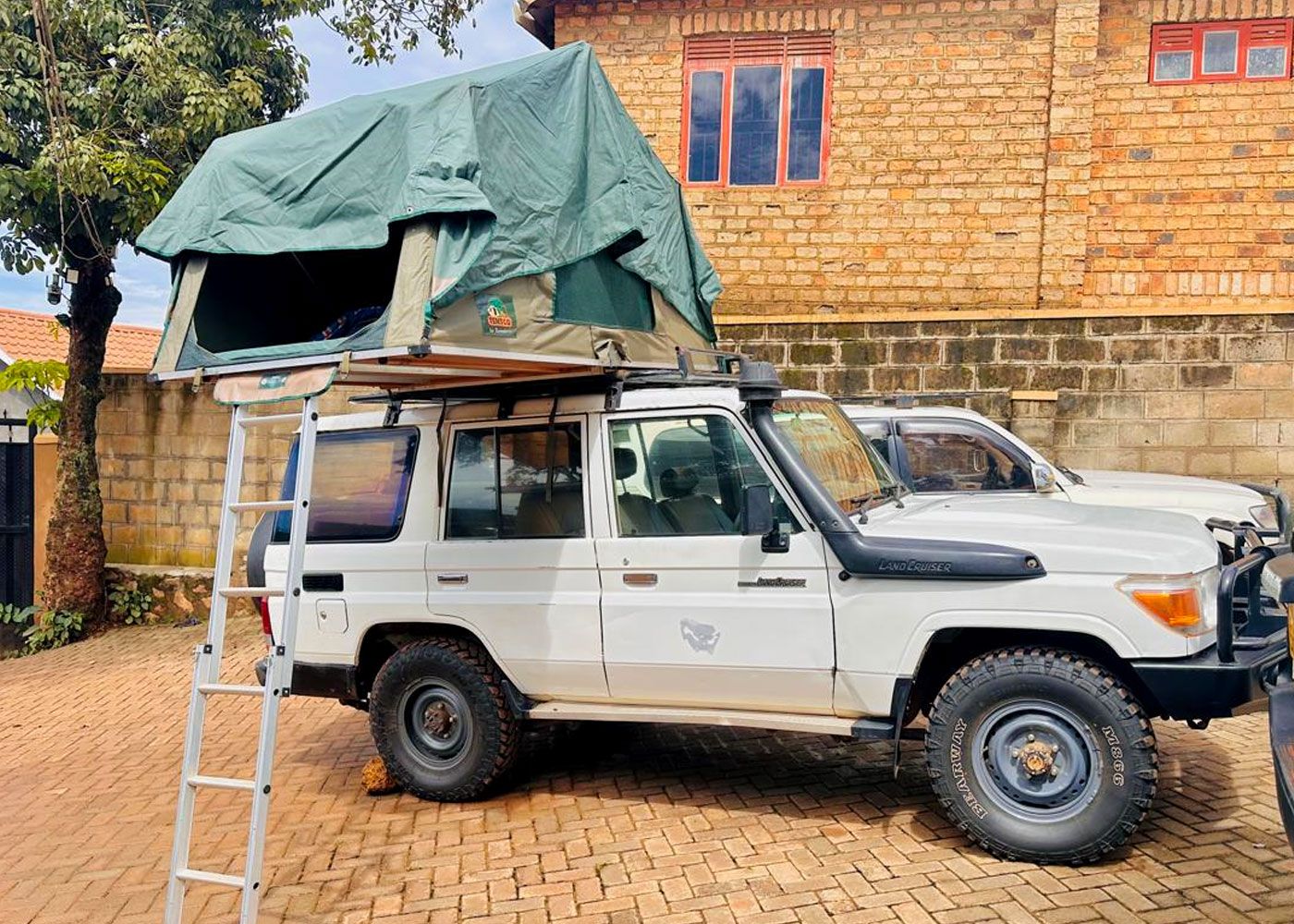
High risk of injury. Climbing up and down a steep ladder can be problematic, and older folks have moved away from them due to the amount of climbing required.
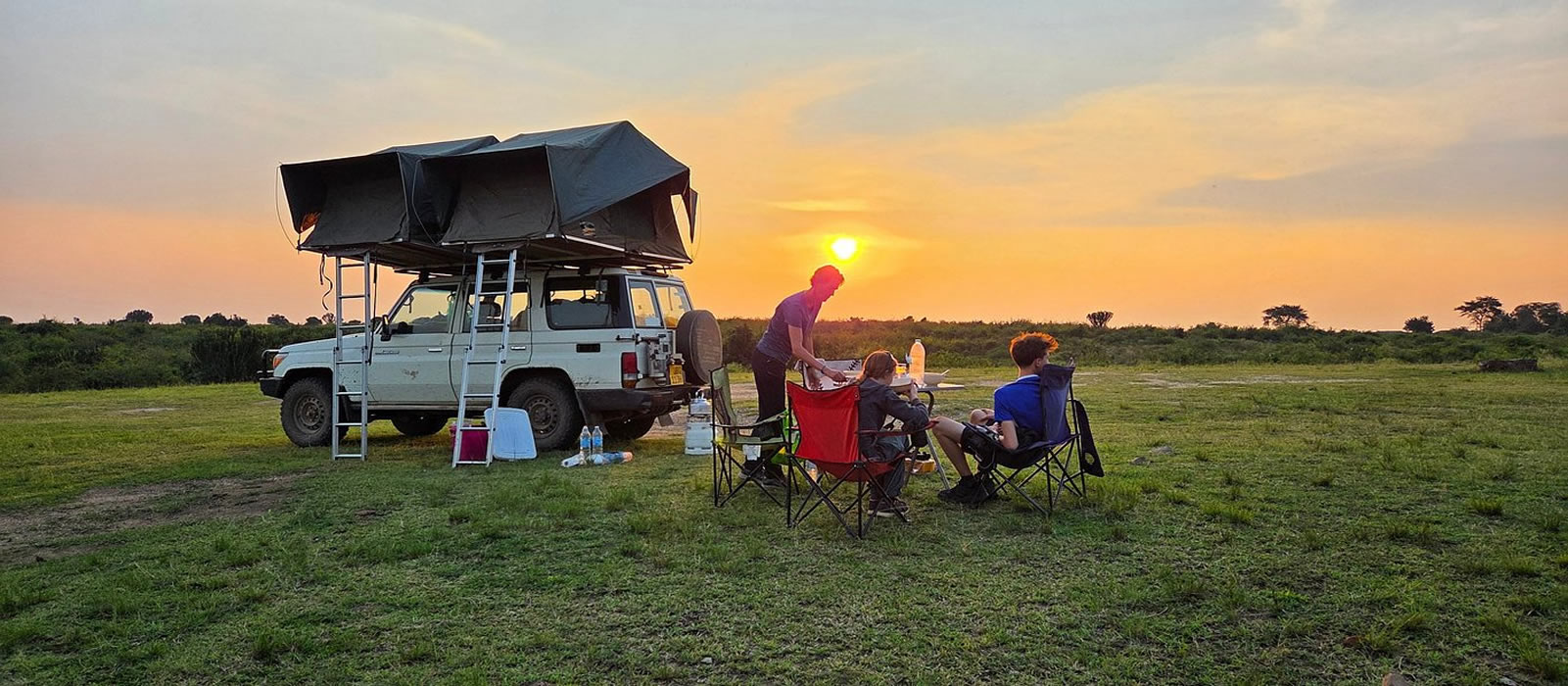
With Uganda car rental, you don’t need to buy your own rooftop tent, we include them in our Camper’s Package. For $90 a day, you get the rooftop tent, camp kitchen, cooler, chairs, lantern, and even bug spray and bear spray. It’s a full setup ready to go.
So, What Should You Choose?
If you want comfort, quick setup, and to stay dry and warm, rooftop tents are the way to go. They’re perfect for couples, solo travelers, or anyone who wants to explore more in less time. If you’re traveling with a group or staying in one place for a while, a ground tent might make more sense. Some people even use both, a rooftop tent for the main sleeping area and a ground tent for the kids or extra space.
Book Your Adventure Today
At Uganda car rental, we make camping easy. Book our Camper’s Package, and it gives you everything you need, including one of our rooftop tents, cooking gear, chairs, and more. You’ll be ready to explore Jinja City, Murchison falls National park, Queen Elizabeth national park or wherever the road takes you.
Ready to camp in comfort and style? Book your rooftop tent rental today and start your Uganda adventure the right way.